
Transform Your Operations with Cloud-Based Distribution Management
Discover how cloud-based distribution management transforms operations using real-time inventory, automated workflows, and insights for fast deliveries.

Share Article:
Industry studies show that while 93 % of FMCG firms use cloud tools, only 22 % adopt a true cloud-first operating model.
This gap shows that many companies are not fully using the benefits of real-time visibility, automation, and scalable operations. Sellin helps fill this gap by providing a cloud-native platform that connects field teams, warehouses, and distributors in real time. It enables companies to adopt a cloud-first approach, reduce manual work, improve decision-making, and drive efficiency across the entire distribution network.
How Cloud-first Strategy Change Daily Operations
Cloud platforms provide real-time data, centralized dashboards, and automated workflows. Staff can access accurate information from anywhere, reducing confusion and speeding up decision-making. Updates happen automatically, allowing teams to focus on core operations. With real-time data, managers can adjust inventory, routes, and schedules instantly, improving accuracy, efficiency, and responsiveness.
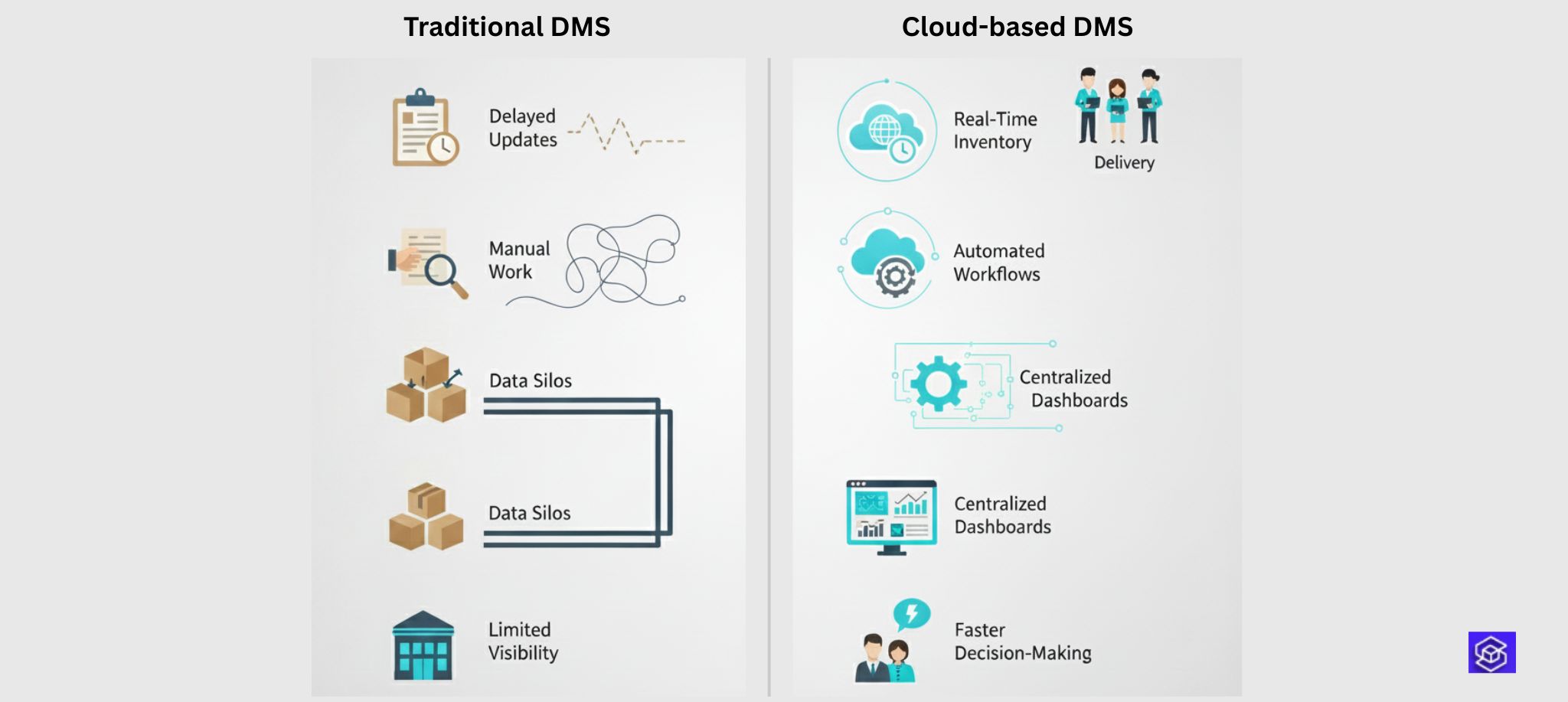
How Cloud-Based Distribution Management Improves Speed and Accuracy & How Sellin Supports It
Cloud systems are transforming distribution operations by providing real-time visibility, automation, and data-driven insights across distribution operations. Companies can now review inventory, orders flow , deliveries and distributor performance from a single platform.
Real-Time Inventory Visibility
Distribution teams often struggle with stockouts or overstocking because traditional systems cannot update inventory instantly. This leads to missed sales or excess inventory costs. Cloud-based inventory management solves this by providing live, accurate stock levels across all warehouses and distributors. Teams can monitor inventory in real time, plan replenishments efficiently, and respond to sudden demand changes, ensuring products are always available and operations run smoothly.
Sellin shows live stock levels across warehouses and distributors, helping teams avoid stockouts and excess inventory. Real-time dashboards help plan replenishment faster and respond quickly to demand changes using accurate, updated inventory data.
Order and Delivery Management with Visibility
Orders can be delayed or delivered incorrectly when tracking is slow, manual, or scattered across multiple systems, disrupting customer trust and efficiency. Cloud solutions provide real-time updates on every order, allowing managers to monitor status, reroute shipments if needed, and ensure accurate, on-time deliveries. This reduces errors, speeds up fulfillment, and strengthens relationships with customers and distributors.
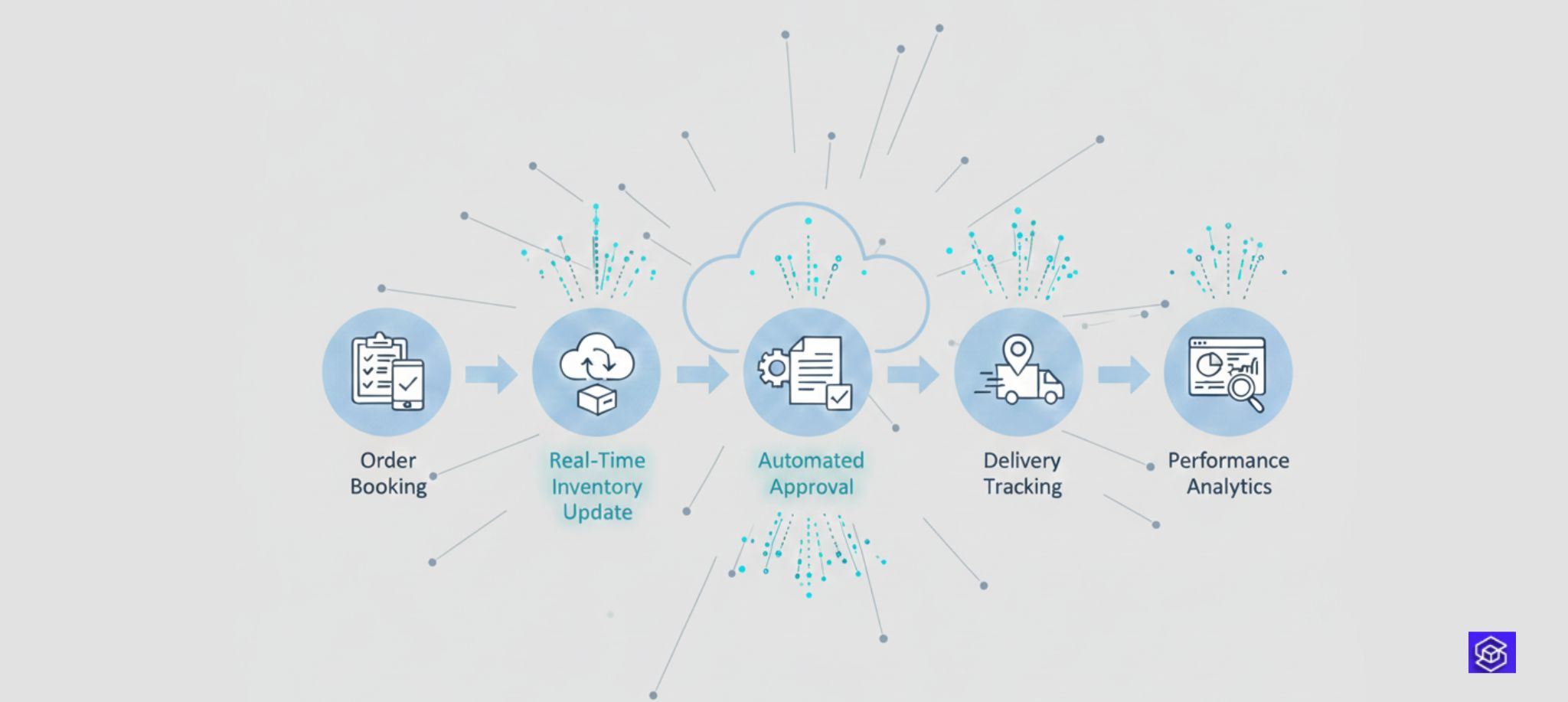
Sellin mobile apps let every role including order booker, delivery man, salesman, distributor enter actions in real time. All data is synced via the cloud, updating centralized dashboards instantly for complete visibility.
Automated Workflows
Manual processes, like updating inventory or reconciling orders, are time-consuming and prone to errors. Teams spend hours fixing mistakes rather than focusing on strategic work. Cloud-based automation solves this by handling repetitive tasks automatically, ensuring accurate data entry, faster updates, and fewer errors. Staff can focus on higher-value activities such as planning, forecasting, and improving customer service, improving both efficiency and operational output.
Sellin automates tasks by using role-based mobile apps and predefined workflows, syncing all actions instantly to the cloud. Distrbutor warehouse inventory, orders, and approvals update automatically, reducing manual work and keeping dashboards accurate in real time.
Distributor Coordination
Poor communication with distributors leads to delays, duplicated work, and inventory mismatches, slowing down operations. Centralized cloud systems solve this by unifying data across distributors, warehouses, and sales teams. Managers can monitor distributor performance, coordinate deliveries, and share updates instantly. This reduces errors, improves collaboration, and ensures all stakeholders work from the same accurate information, creating a seamless and efficient distribution network.
Sellin’s cloud-connected platform lets managers monitor distributors, coordinate deliveries, and share updates instantly. All data is unified and visible in real time, preventing mismatches or duplicated work.
Actionable Insights and Analytics
Managers often make decisions based on outdated reports or manual calculations, which can lead to errors and missed opportunities. Cloud solutions solve this by providing real-time dashboards, analytics, and performance metrics. You can monitor inventory, track orders, and evaluate distributor performance instantly. Access to actionable insights allows faster, data-driven decisions, reduces operational risks, and helps optimize inventory, logistics, and overall distribution efficiency.
Sellin provides real-time dashboards and analytics for inventory, orders, and distributor performance. Managers get instant, data-driven insights without relying on outdated reports or manual calculations.
Scalability and Flexibility
Adding new products, distributors, or warehouses is slow and costly with legacy systems, limiting growth. Cloud-based distribution management System (DMS) solves this by scaling effortlessly with your business needs. You can add SKUs, expand geographically, or onboard new partners without downtime or complex upgrades. This flexibility allows companies to adapt quickly to market changes, handle peak demand, and grow operations efficiently without disrupting daily workflows.
Because Sellin operates in the cloud, adding new products, distributors, or warehouses is seamless. Scaling up or expanding geographically happens without downtime or complex IT work.
Improved Customer Satisfaction
Customers are frustrated by delayed or incorrect deliveries, which can harm loyalty and repeat business. Cloud solutions solve this by ensuring real-time visibility, accurate order processing, and faster fulfillment. Teams can proactively prevent errors, track shipments, and communicate updates instantly. This reliability enhances trust, improves the customer experience, and strengthens relationships with distributors and clients, creating long-term value and higher retention.
Real-time cloud updates ensure accurate order processing and timely deliveries. Teams can track shipments, prevent errors, and communicate instantly, improving reliability and trust with customers.
Cloud-Based Distribution Management
Why Distribution Companies Cannot Rely on Traditional Tools
Distribution has become more demanding, with every order moving through multiple steps. Any delay affects customer trust and results in lost opportunities. Traditional systems create hurdles that push companies to explore cloud technology. Here are the reasons why companies can no longer rely on traditional tools and methods of distribution management.
Rising Customer Needs: Modern buyers expect transparency, quick updates, and accurate order status. Traditional tools cannot process information in real time, causing delays and confusion.
Growing Product Ranges: Handling thousands of SKUs requires clean, dependable data. Legacy systems in distribution struggle with large volumes, leading to stock mismatches and slow reporting.
High Competition: Companies using slower tools fall behind competitors with modern, real-time systems that enable faster planning and better service.
Different Challenges FMCGs Face with Legacy Systems
Legacy systems rely on outdated software, on-premise servers, and manual workflows. They slow operations, limit real time decision making, and struggle to handle growing products and rising customer expectations. The following challenges highlight why many distribution companies can no longer rely on legacy tools for modern operations.
Slow Updates and Delayed Information
Legacy systems refresh data slowly, meaning teams often work with outdated stock and order numbers. This creates incorrect inventory snapshots, leading to stockouts, overstocking, or delays in fulfilment. Delays also affect communication with customers and distributors, reducing confidence in the company’s ability to provide accurate and timely service.
Limited Visibility
Information in legacy systems is usually scattered across multiple tools such as ERPs, spreadsheets, or manual reports. Managers cannot see real-time distributor stock, delivery progress, or pending orders. This lack of visibility slows planning, increases mistakes, and forces teams to spend excessive time manually reconciling data.
Hard to Adapt
As businesses grow and add new SKUs, regions, or distributors, legacy systems struggle to scale. Upgrades are costly, require long timelines, and depend on technical experts. Instead of enabling growth, these systems become barriers that limit expansion and slow down operational efficiency
High Dependency on Manual Work
These systems push teams toward heavy manual work because they cannot automate key tasks. Field teams spend hours entering data, reconciling numbers, and fixing errors that occur across multiple tools. Any small mistake in one sheet or system spreads quickly into inventory, orders, and reports. This dependence on manual effort reduces productivity and prevents teams from focusing on sales, execution, and customer engagement.
Poor integration capabilities
Older systems do not integrate easily with mobile apps, cloud platforms, or distributor systems. Data silos form across sales, inventory, finance, and logistics. This lack of connectivity leads to duplicated entries, missing information, and slower reporting, making it harder for companies to maintain accurate and unified data.
Frequent Downtime and Technical Issues
Physical servers and outdated software require constant maintenance and are prone to slowdowns or failures. System outages disrupt order booking, dispatch planning, and reporting, creating pressure on teams and lowering service reliability during peak periods.
Limited Analytics and Insights
Legacy systems offer mostly static reports that require manual compilation. Real-time forecasting, route optimization, and distributor performance analysis are not possible. Managers must make decisions based on assumptions instead of data, which reduces accuracy and slows response to operational issues.
Costly to Maintain
Maintaining older software and physical servers becomes increasingly expensive over time. Licensing, hardware upgrades, and technical support costs rise every year. Legacy systems also face higher operational risks due to reduced updates and patches, making them a costly and unreliable choice for modern distribution.
Conclusion
Distribution companies face challenges such as delayed orders, stock mismatches, scattered data, and heavy manual work. These issues slow operations, reduce accuracy, and hurt customer satisfaction. Cloud-based distribution management systems solve these problems by providing real-time data, centralized dashboards, automated workflows, and seamless coordination across teams and distributors. Sellin is designed to deliver these benefits specifically for distribution operations. Its mobile apps allow field staff to update every action in real time, while cloud connectivity keeps dashboards accurate and managers informed. With automation, visibility, and scalability, Sellin helps companies operate efficiently, make faster decisions, and improve reliability and customer trust.