Territory Mapping for Accurate Secondary Sales Visibility
Learn how territory and geo-area mapping improves secondary sales tracking, distributor visibility, and field execution with real-time insights.

Share Article:
Sales teams and distribution managers often struggle with limited visibility into secondary sales. Without accurate insight, it is tough to track product movement, identify stock gaps, or support timely replenishment decisions. This is where Sellin supports territory and geo-area mapping that helps structure distributor coverage, outlet allocation, and field execution visibility. This results in clearer and more actionable secondary sales tracking based on field-captured and distributor-reported data.
This article explains how Sellin connects field execution with distributor visibility for tracking secondary sales. Additionally, this guide will introduce modern tools that ensure efficient, measurable outcomes for sales and distribution teams.
Why Do Businesses Make Efforts for Secondary Sales Tracking?
Secondary sales tracking is a strong element for growth-focused organizations. It ensures visibility into market performance and shows how products actually move through distributors to retailers. Organizations invest in tracking secondary sales for the following outcomes, which are directly linked to business success:
For Market-Driven Planning
Timely secondary sales data helps sales and supply teams align distribution decisions with actual market demand. It helps teams plan distribution more effectively based on actual market demand
For Distributor Accountability
Companies pay substantial amounts to distributors for their products' long life and greater market coverage. Clear visibility into each distributor's performance helps identify who is driving growth and where intervention is needed. This visibility supports more informed resource allocation and clearer performance evaluation of distributor partners.
For Revenue Accuracy
Without accurate visibility, revenue leaks often go unnoticed due to unsold stock, false reporting, or missed secondary orders. Tracking retail-level sales activity improves financial visibility and helps identify potential revenue gaps early.
For Intelligent Forecasting
Reliable data enables proactive decision-making instead of reactive fixes. With visibility into what sells, where, and how fast, teams can forecast demand accurately. It supports supply and distribution planning decisions. and adjust territory coverage or beat plans to match evolving market dynamics.
For Business Future-Proofing
Secondary sales tracking safeguards a company's long-term stability. Historical secondary sales data remains available even if distributor relationships change, helping businesses retain market insights.
This is where comprehensive sales visibility protects a business and keeps it updated with market realities. This data continuity prevents disruption, maintains market presence, and helps the company quickly rebuild distribution strength without losing sales momentum.
How Sellin Delivers Secondary Sales Visibility Through Territory Mapping
Sellin is secondary sales visibility software. Its territory mapping feature provides the geographic and operational clarity that businesses require to transform raw sales data into actionable performance intelligence. It supports every aspect of secondary sales tracking by creating structured visibility between the field, distributors, and central teams. It provides the following outcomes:
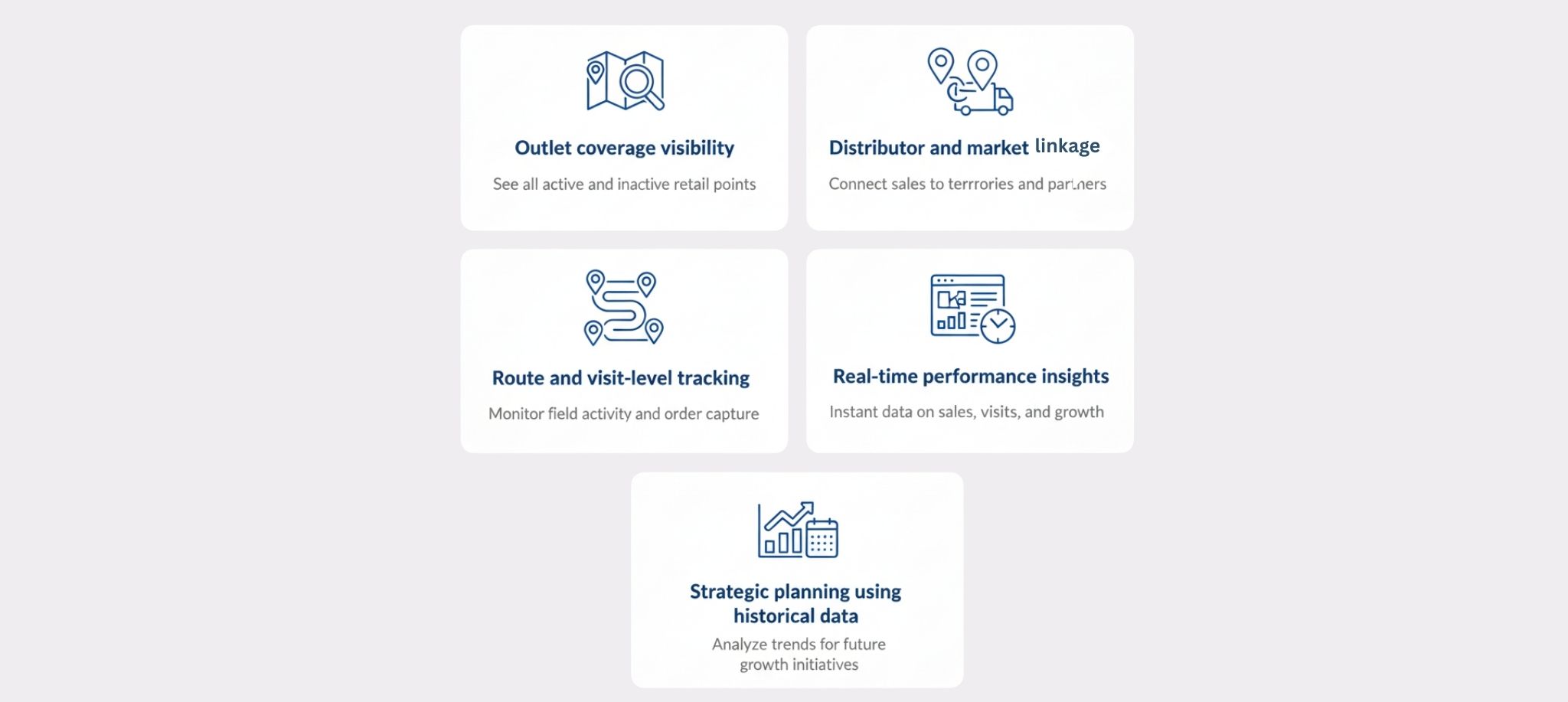
Improved Outlet Coverage Visibility: Mapped territories ensure that every distributor and field representative knows their designated outlets and zones. This avoids overlaps or missed coverage, ensuring every retail point contributes to accurate secondary sales data.
Distributor and Market Linkage: Territory mapping connects distributor areas with their respective retail networks. This linkage makes it easier to trace which distributor drives which segment's sales. It helps businesses measure actual market contribution and performance health.
Route and Visit-Level Tracking: By integrating mapped beats and visit schedules, managers can see which outlets were visited, which orders were booked, and how those activities translate into secondary sales. This creates accountability and bridges the gap between planning and execution.
Real-Time Performance Insights: When mapping tools are connected with sales dashboards, companies can monitor live performance to know sales density, product movement, and outlet productivity. This enables timely decisions, such as redistributing stock, revising territories, or reassigning beats, to achieve better results.
Informed Strategic Planning: Historical territory performance helps forecast demand, identify high-growth pockets, and refine coverage strategies. Instead of relying on broad estimates, managers plan precisely based on mapped data that reflects actual market activity.
Which Technology Can Help Businesses in Secondary Sales Tracking?
In modern sales ecosystems, data moves faster than manual processes can handle. To stay aligned with market realities, organizations now rely on technology that automates reporting, delivers real-time visibility, and empowers both field teams and managers to make informed decisions.
Here are the key ways modern sales technology enhances secondary sales management and overall distributor performance:
Mobile Applications for Field Teams
Sellin Mobile-first systems enable field representatives to record secondary sales, update outlet visits, and capture order details directly in the field. Every sale activity, returns (where enabled), and field updates sync instantly with central dashboards, removing delays and human error. Reps also gain access to outlet history, beat plans, and performance summaries, enabling more intelligent conversations and more productive visits.
Dashboards and Reporting for Managers (ASM, RSM, ZSM)
Sellin holds real-time dashboards for Area Sales Managers (ASMs), Regional Sales Managers (RSMs), and Zonal Sales Managers (ZSMs) to provide a unified view of market performance. It enables you to track territory-wise coverage, distributor efficiency, outlet activity, and SKU-level sales at a glance. Trends, gaps, and alerts appear instantly and help decision-makers act quickly and keep targets on track.
Automated Data Flow and Process Efficiency
Automation eliminates the need for manual report collection and data consolidation. Field entries flow directly into centralized systems, where performance metrics and exceptions are updated in real time. This ensures accuracy, saves hours of coordination, and allows leadership to focus on insights rather than administration.
How Technology Transforms Secondary Sales Tracking?

Manual tracking methods can considerably delay decision-making processes and obscure the actual performance metrics of a business. In contrast, cutting-edge technology seamlessly integrates every tier of distribution, equipping companies with comprehensive insights into their sales data. Mobile applications empower field teams to capture vital information on sales figures, inventory levels, and outlet visits instantaneously while in the field.
These applications not only enhance efficiency but also ensure that data is captured accurately and promptly. Moreover, dynamic dashboards provide Area Sales Managers (ASMs), Regional Sales Managers (RSMs), and Zone Sales Managers (ZSMs) with immediate visibility into both coverage and distributor performance metrics.
Additionally, automated reporting systems enhance data reliability and expedite the response time for management decision-making. These advanced tools enable companies to achieve End-to-end visibility across mapped territories, distributors, and field activities. It strengthens oversight of distributor performance through transparent data and reporting. By adopting such technology-driven solutions, businesses can stay agile and responsive in a competitive marketplace.
Why Sellin is the Right Choice
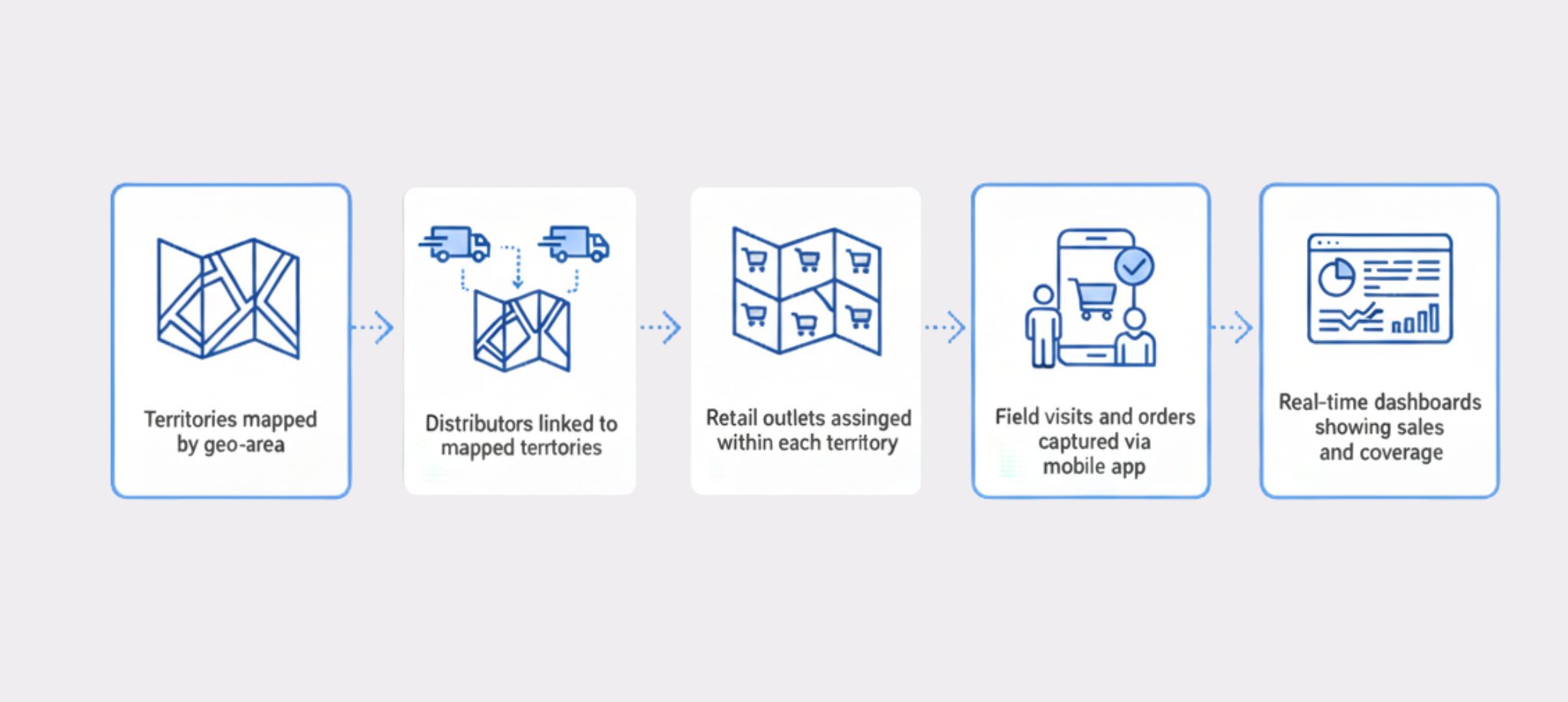
Sellin gives businesses a clear, real-time view of secondary sales through geo-area mapping. Managers can track distributor and outlet performance within defined territories, identify coverage gaps, and take quick action. Field reps update visits and sales directly from the mobile app, while dashboards turn this data into instant insights for every level, from ASM to RSM. With transparent mapping and automated tracking, Sellin ensures complete visibility and more consistent sales execution.